
Before booking staff training, clarify what employees need to do differently and whether training can address the underlying problem.
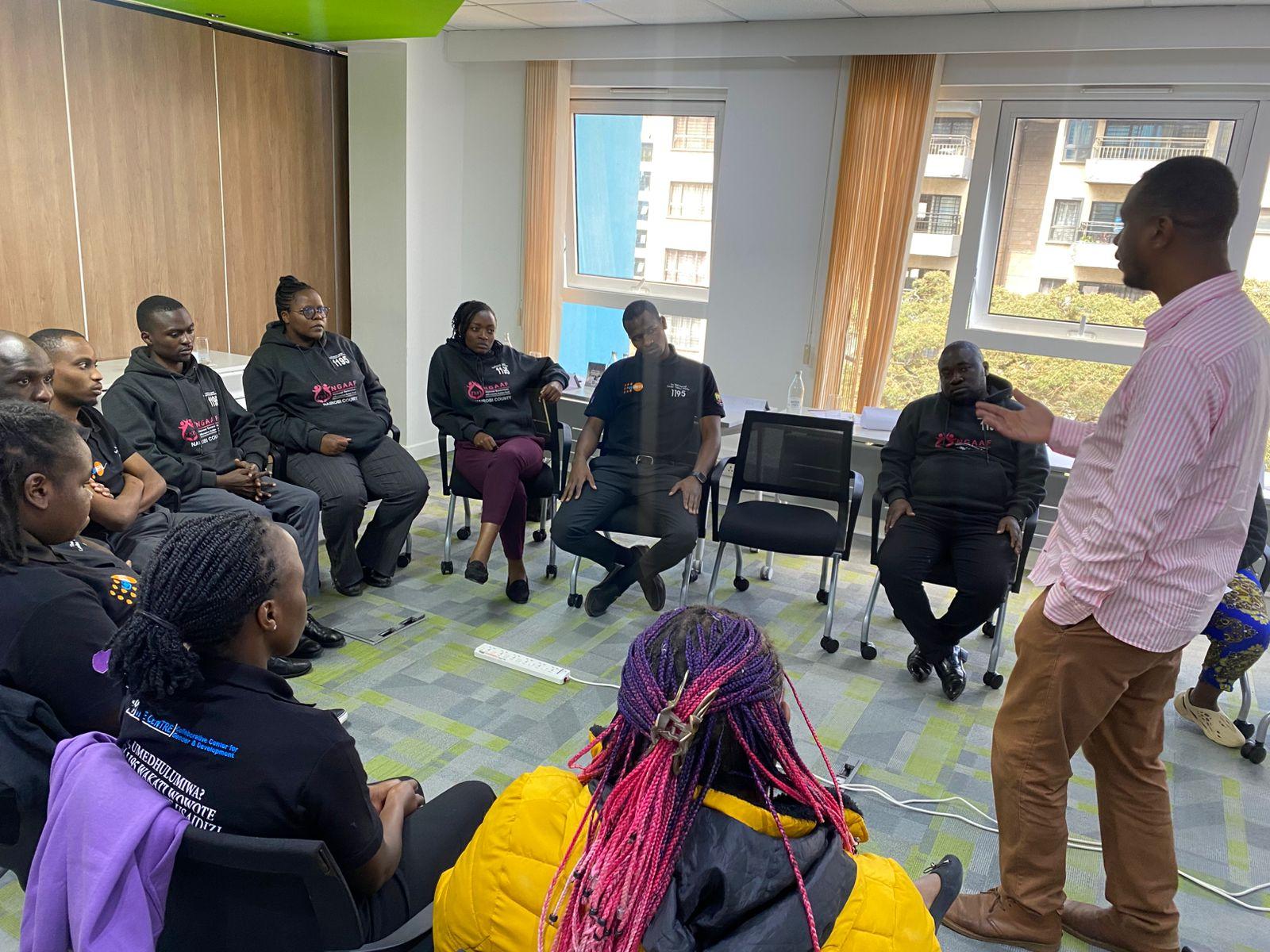
 Participants actively practising a skill and working through a learning exercise together during a Vector Learning workshop.
“We need communication training” can mean several things. Employees may struggle to explain information clearly. They may be unsure about who needs an update. Or they may be working with a process that makes timely communication difficult.
Each situation calls for a different response. Before booking staff training in Uganda, clarify what employees need to do differently and what is getting in their way.
A focused brief helps you choose a relevant programme, use the available time well and plan how learning will be applied afterwards.
Describe the change you want to see
Begin with the work rather than a broad training topic. Ask what a participant should be able to do after the session that they find difficult today.
For a sales team, that might mean asking better discovery questions before preparing a quotation. For supervisors, it might mean giving clear feedback on a specific behaviour. For a customer service team, it might mean handling an escalation with a consistent sequence of steps.
Be precise enough to guide the session design. “Improve customer service” covers a large area. “Practise responding to a dissatisfied customer and agreeing on the next step” provides a more usable learning objective.
Check whether training addresses the problem
Training is appropriate when people need knowledge, skills or practice. However, a performance problem may also involve unclear responsibilities, missing tools, conflicting instructions or approval delays.
Ask employees and managers what prevents the desired behaviour. Review examples of the work where possible, such as common errors, customer enquiries or an existing process.
If employees already know what to do but cannot do it because of a system constraint, that constraint needs attention. Training may still support the change, but the brief should recognise what the session can address and what the organisation must resolve separately.
Understand who will attend
Participants may have different levels of experience, responsibility and previous training. A useful brief should identify their roles, group size, language needs and familiarity with the topic.
Ask what they have already learned and what they still find difficult. This helps avoid repeating introductory material for an experienced group or moving too quickly for people who need a foundation.
Also consider whether managers should participate. Their involvement may help with shared expectations and follow-through, although sensitive discussions may require separate spaces.
Choose a format that fits the objective
A presentation can introduce a topic or give a group a shared starting point. Skills training provides instruction, demonstration and practice. Facilitated learning helps participants explore experiences, work through questions and develop shared decisions.
These formats can work together. A sales session, for example, could introduce a questioning technique, let participants practise in pairs and then use a facilitated discussion to identify where the technique fits their customer conversations.
Choose the activities because they support the learning objective. If employees need to practise a difficult conversation, the agenda should give them time to attempt it, receive feedback and try again.
Give participants a practical connection to their work
Use realistic examples that reflect the audience's responsibilities. A supervisor workshop can use a feedback scenario. A service workshop can examine a typical customer complaint. A planning session can use an actual project challenge with confidential details removed.
Instructions should be short and clear. Participants need to understand what to do, how much time they have and what they will share afterwards.
After an exercise, allow time to discuss what was learned and how it applies. Without that reflection, an activity may remain an enjoyable experience with an unclear connection to work.
Agree on follow-up before the session
Decide how participants will apply the learning and who will support them. A manager might observe a practice attempt, review a revised work sample or discuss an agreed action at the next team meeting.
Choose evidence that matches the objective. For sales discovery training, you might review whether enquiry notes capture the customer's need, timing and decision process. Participant feedback can tell you how the session was received, but it does not by itself establish a change in workplace performance.
A short follow-up review can reveal what people used, where they struggled and what support they need next.
Build a clearer training brief
Before contacting a provider, gather the workplace challenge, desired change, participant roles and numbers, previous training, available time and preferred dates. Include any practical constraints and your plan for follow-up.
At Vector Learning, this brief provides a starting point for designing professional development, facilitated learning and practical workplace sessions around your organisation's needs.
Speak to Vector Learning about a staff development session for your team.
Ready to build a focused training brief that drives real workplace results?
Get in TouchComments (2)
Leave a Comment
Your email address will not be published. Required fields are marked *
Patrick N.
October 7, 2026The distinction between a training need and a system constraint is crucial. So often we try to solve operational bottlenecks with more training when the process itself is broken.
ReplyGrace K.
October 7, 2026Agreeing on post-training follow-up before booking is a game changer for HR managers. It ensures management buy-in from day one.
Reply